
Scapula
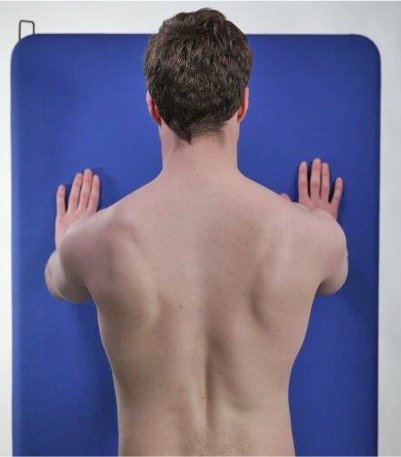
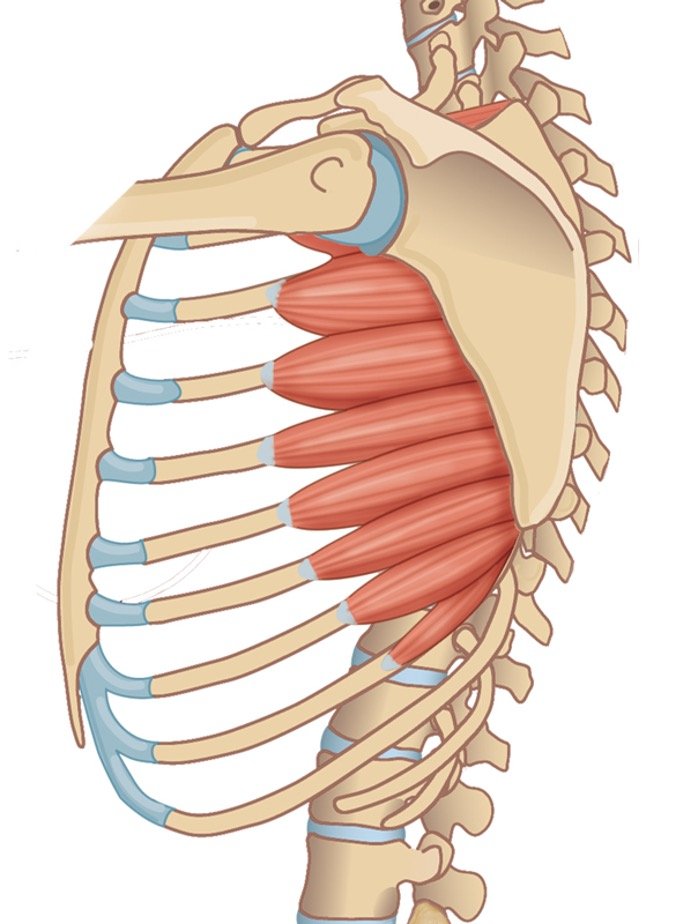
In injury to the long thoracic nerve (N. thoracicus longus), the scapula rotates so that the lower corner moves toward the midline and away from the body during arm flexion against resistance and arm elevation against a wall as shown in the picture
- Serratus anterior superior; Attaches to the superior angle
- Serratus anterior intermediate; Attaches to the medial border
- Serratus anterior inferior; Attaches to the inferior angle
- All three parts of the muscle pull the scapula forward on the thorax, acting as an antagonist to the rhomboid muscles (Mm. rhomboidei)
- The upper and lower parts of the serratus anterior muscle, together with the rhomboid muscles, hold the scapula against the thorax
- The lower part of the muscle can pull the lower part of the scapula laterally and forward and rotates the scapula so that elevation of the arm becomes possible.
Causes of winged scapula
- Long thoracic nerve (C5-7)
- Affection of the long thoracic nerve causes paresis of the serratus anterior muscle and winged scapula, especially during flexion against resistance and during "wall push-ups." Most commonly triggered by neuritis or injury from strain, surgery in the area.
Other nerve injuries that cause winged scapula
- N. accessorius (11th cranial nerve)
- Affection of N. accessorius causes paresis of M. trapezius and winged scapula, especially during abduction against resistance. Most commonly triggered by/through surgery (lymph nodes, lipoma/tumors) or compression.
- N. dorsalis scapulae (C5)
- Affection of Mm. rhomboidei. Winging during arm extension.