
Ligament injury
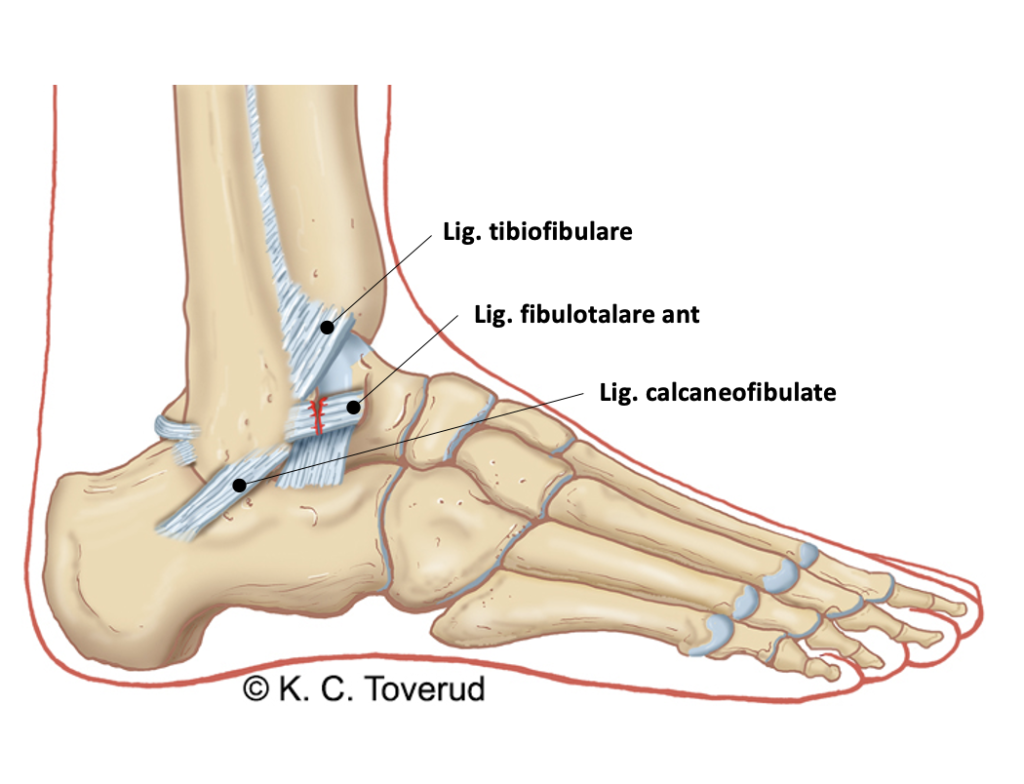
Anterior talofibular ligament
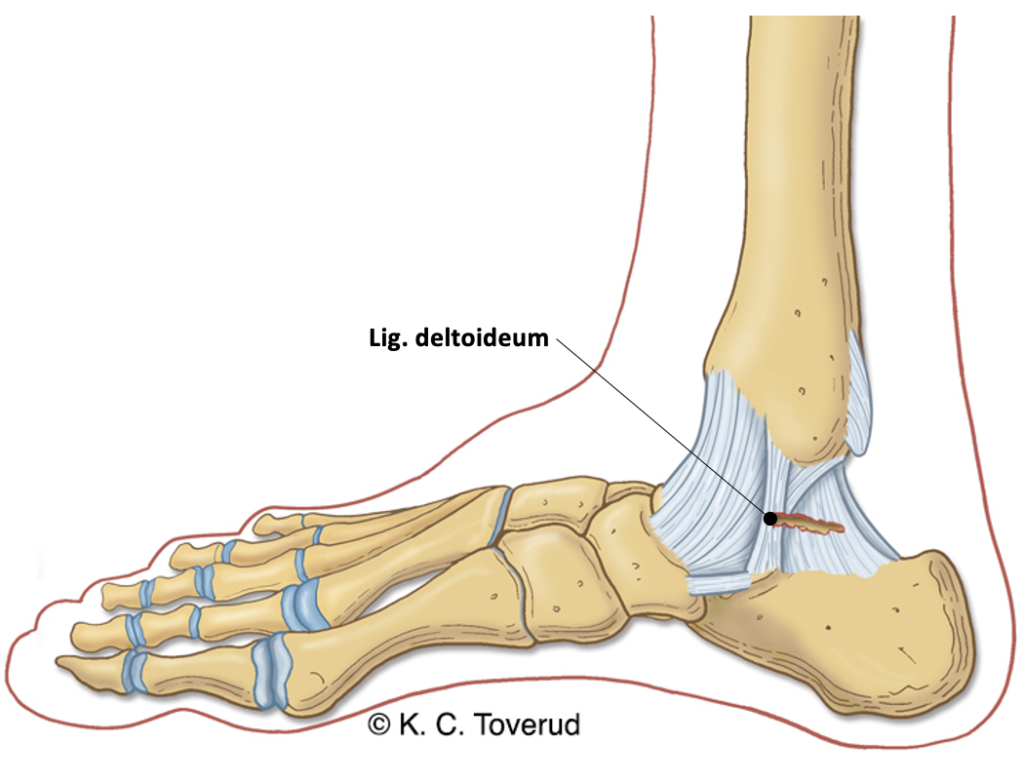
Deltoid ligament
Lateral injury mechanism
Inversion trauma
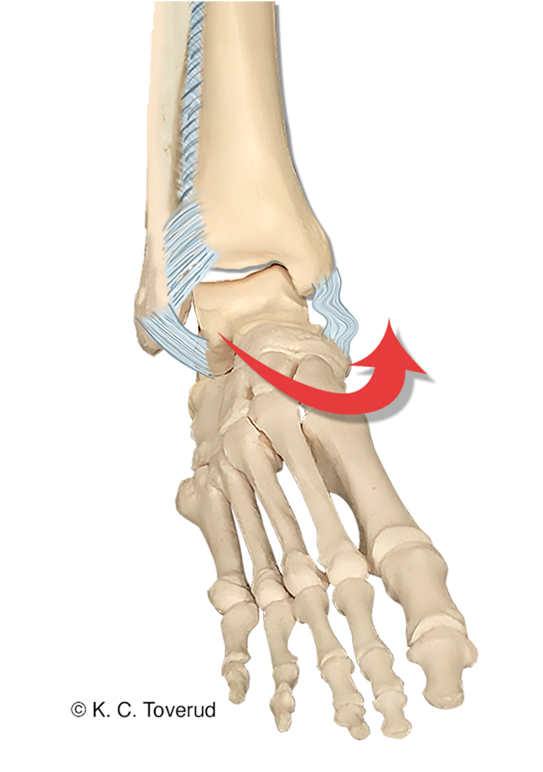
Foot position at injury
- Adduction
- Plantar flexion
- Pain with inversion and plantar flexion in lateral injury
Medial injury mechanism
Eversion trauma
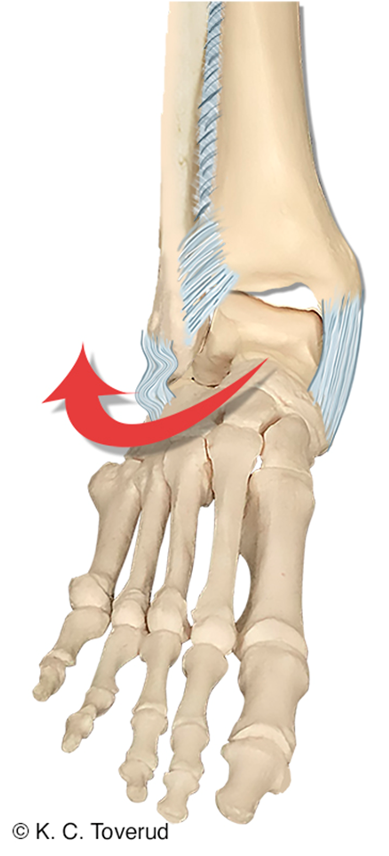
Foot position at injury
- Abduction
- Dorsiflexion
- Pain with eversion and dorsiflexion in medial injury
Ankle stability
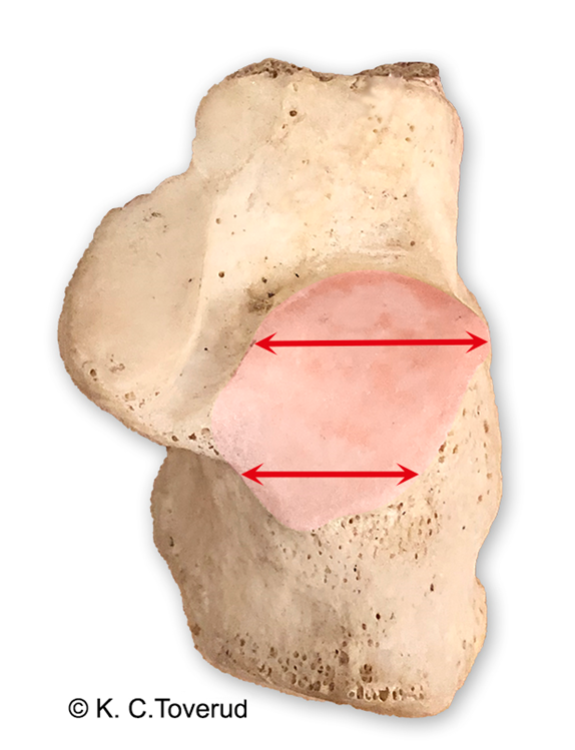
When ankle in dorsiflexion most stable
- Ankle is least stable in plantarflexion
Injury to the anterior talofibular ligament
- Accounts for 85% of all ankle injuries. Usually inversion trauma (ankle sprain), primarily with partial or complete rupture of the anterior talofibular ligament, followed by the calcaneofibular ligament
- Injury to both is most common among patients with a previous injury
- About 20% with previous injury develop chronic problems with instability and increased risk of new injury
- Rare injury to the posterior talofibular ligament
- Swelling, pain, and bleeding in front of and below the lateral malleolus
- Examined with anterior drawer test and talar tilt test, but difficult to perform in the acute phase
Ankle ligament injury grading
- Grade I (Mild): Slight swelling and pain with good function.
- Grade II (Moderate): Moderate swelling, pain, and reduced function. Decreased proprioception and range of motion. Instability.
- Grade III (Severe): Complete ligament rupture, significant swelling, severe pain, and marked instability.
Ligament injury, stability test
Drawer test
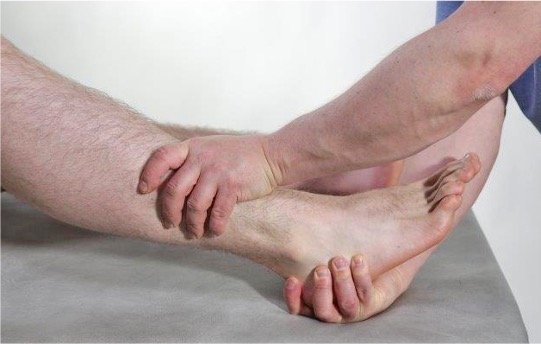
- Ligament talofibulare anterius
- Reveals instability when pressing the tibia backward while simultaneously pulling the ankle forward
Talar tilt
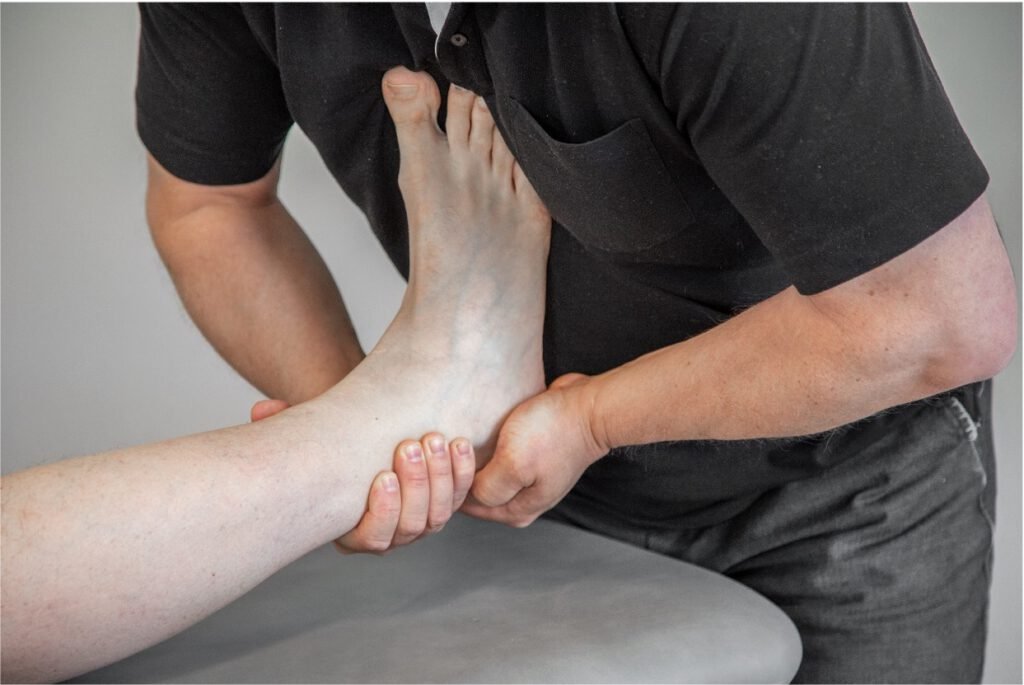
- Ligament calcaneofibulare
- Reveals instability and pain when pressing the calcaneus in inversion